Can AI Cause Psychosis?
Probably not, says a UCSF psychiatrist — but chatbots might compromise mental health in other ways.
Image
Image

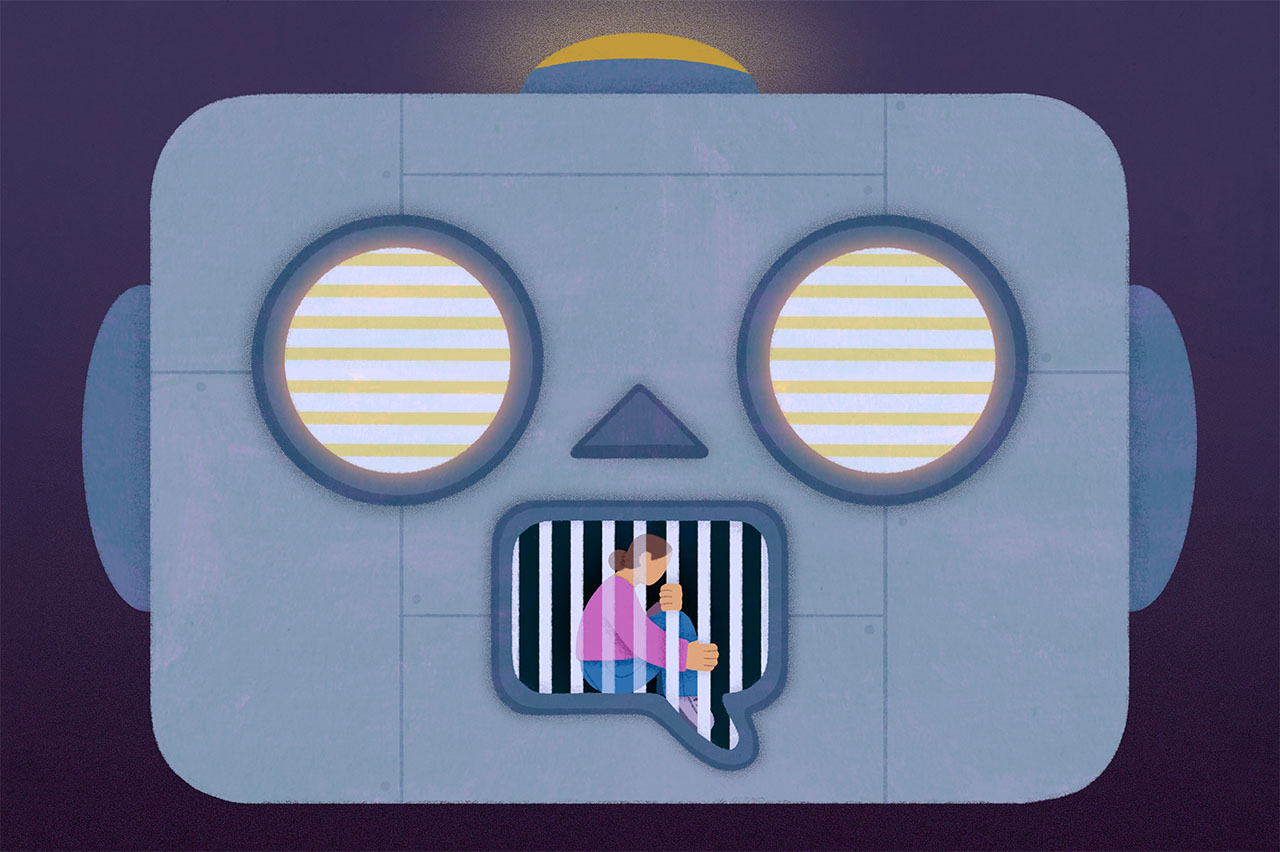
“AI psychosis” has become the popular term for situations when people lose touch with reality during extended conversations with chatbots. These reports are disturbing, but what’s really going on? Karthik Sarma, MD, PhD, a resident in psychiatry and a computational health scientist, founded UCSF’s AI in Mental Health Research Group to help answer such questions. He explains the mystery around the phenomenon and what he and his colleagues are doing to better understand the link between chatbots and mental health.
You don’t like the term “AI psychosis.” Why?
The implication is that AI is causing the psychosis directly, which may not be true. I prefer the term “AI-associated psychosis.”
What else could explain it?
One possibility is that excessive chatbot use is a symptom of the psychosis. I have a patient with bipolar disorder who takes a lot of showers when they’re experiencing a manic episode. The showers aren’t causing the mania; they’re an early sign of it. So it may be that when some people start having a psychotic episode, they tend to use chatbots more and are more likely to talk about delusions while doing so.
Another possibility is exacerbation. Perhaps these people would have had an episode regardless, but using a chatbot somehow made the episode worse or happen earlier. It’s unlikely that someone without any risk factors or underlying vulnerability to psychosis or mania would have it triggered by a chatbot, but we don’t know for sure.
Chatbot conversations have also been linked to suicides. Are there links to other symptoms of mental illness?
I’ve heard of cases related to anxiety and obsessive-compulsive disorder. My colleague has a patient who worries a lot about her health. She’ll go to ChatGPT and describe an ache or pain, and the chatbot will say something like, “That sounds pretty normal, but if you experience these more serious things, you should call a doctor.” As an individual response, it’s appropriately reassuring. But unfortunately, this patient is giving ChatGPT the same prompt 20 times a day and getting the same answer. And because there’s no person on the other side to recognize the pattern, it becomes reinforcing and could make the anxiety worse.
You’re leading a study of the relationship between chatbots and mental health. What do you hope to learn?
We’re inviting patients at UCSF’s psychiatry and behavioral health clinics to send us the logs of their chatbot conversations, and then we’ll compare those logs with what we know about their mental health. For example, if someone is depressed, do they use different kinds of words? Do they talk more or less? Similarly for mania, psychosis, and other mental illnesses, we’re interested to see if we can find markers of those illnesses in the chatbot logs, which could help us understand these conditions better and improve our treatments. And if people are having conversations that seem out of the ordinary or unsafe, we want to dig into those to learn what’s happening and how it relates to their illness.
You’re also creating a screening tool for problematic chatbot use. How does it work?
It’s a questionnaire, like the ones you’ve probably filled out at your doctor’s office for depression or alcohol use. Psychiatrists have a set of warning signs we use to screen for problematic use disorders that don’t involve substances, like gambling disorder or internet gaming disorder (which is not officially a diagnosis but may soon become one). We ask questions like “Are you being honest with other people about what you’re doing?” or “Is it affecting your performance at work or school?” or “Have you ever tried to stop but can’t?”
All those factors apply to chatbot use, and we identified three potential new ones. The first we’re calling functional dependence: Are you no longer able to complete tasks without using a chatbot? The second is relational dependence: Do you prefer to spend time chatting with a chatbot rather than with your family or friends? Do you feel the chatbot understands you better than anyone else? And then the third factor is related to AI literacy: How often do you believe AI over a human expert? Do you believe the chatbot has genuine feelings or its own consciousness? None of these factors are necessarily problematic on their own; it’s the combination that may be concerning.
What can doctors do to help?
There aren’t yet any evidence-based interventions specifically developed for problematic chatbot use. But generally speaking, if a clinician is worried about a patient, they should ask them how they use chatbots and why it’s important to them. Then, depending on the nature of the problem, there may be psychotherapeutic techniques or therapies that could be adapted to address it.
Do you use chatbots yourself?
I use AI systems routinely to write and analyze computer code and to flesh out research ideas. I don’t use them for my emotional life, but I have close colleagues who do. They’ll talk through conversations they’ve had with a partner or share their thoughts and feelings.
Do you worry about the impact of chatbots on your or their mental health?
I can’t say that I do. I don’t think there’s a lot of danger in using these tools as long as you understand what they can and can’t do, and you’re able to reason and think clearly.
That said, there may be something unique about the way chatbots appear to have real conversations. I suspect these systems tap into parts of our brain that are attuned to interacting with other people, which no other technology in human history has been able to do. What that means, we don’t know yet, but it’s important that we find out.